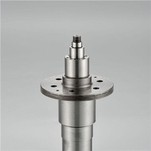
Nickel plating can add durability, hardness, electrical conductivity and heat resistance to a product, in addition to preventing corrosion and enhancing its aesthetic appeal. Before getting electroplating services from a metal processor, you must first decide between two plating methods: electrolytic plating or electroless plating. Electrolytic plating requires an electric charge or direct current to initiate a chemical reaction bath, into which the plated object is immersed. Electroless nickel plating (also known as autocatalytic coating) does not require an electric current or variation, instead, phosphorus is used as a chemical reducing agent in chemical formulations, and both methods have the same end product.
What is electrolysis and electroless nickel plating?
Traditional electrolytic nickel plating requires a catalyst and a direct current (DC) charge to initiate a chemical chain reaction to coat an object (substrate) with a thin layer of nickel. However, electroless nickel plating does not require a catalyst or electric charge. In contrast, electroplated formulations include a chemical reducing agent (phosphorus) that allows the user to coat the substrate without further processing. Electrolytic nickel plating uses a catalyst and a direct current charge to create a chemical chain reaction that coats the component with a layer of nickel. Electroless nickel plating, on the other hand, does not require a catalyst or charge. Instead, it uses alternatives such as chemical reducing agents, usually phosphorus.
Both methods add a thin layer of nickel to the target surface, but electroless nickel plating provides additional wear and corrosion resistance, lubricity, and auxiliary performance characteristics compared to electrolytic nickel plating. Electroless nickel plating, also known as autocatalytic coating, can be used in projects with tight tolerance specifications and is easy to apply in uniform layers. Electrolytic nickel plating is typically thicker at the end faces and edges of the motor shaft and does not provide the same level of accuracy. In the electrolytic plating process, the deposition density is controlled by the length of time the product is immersed and the number of amperes applied per square foot.
Nickel plating process
Before nickel plating, the substrate must be cleaned and pretreated, which varies depending on the type of substrate and the intended use of the product. Next, the product is placed in an electroplating cell consisting of positively charged dissolved nickel-phosphorus. The substrate automatically attracts positively charged nickel ions to its surface, creating a fine coating. Electroless nickel plating does not require electricity and does not require constant filtration to prevent debris from adhering to the surface.
Advantages of electroless nickel plating
Electroless nickel plating offers numerous advantages over conventional electrolytic nickel plating, including: More uniform deposition thickness: electroless nickel plating is more precise than electrolytic plating with tolerances of +/- 0.001 mm. It can be used to handle complex geometries and avoid a common problem known as the "dog bone effect," which occurs when too many amperes per square centimeter are applied during electrolytic plating, resulting in inconsistent deposition.
Excellent corrosion resistance
Due to the introduction of phosphorus into the solution, electroless nickel plating provides better corrosion resistance. Improved electromagnetic shielding, phosphorus also provides magnetism, enabling metalprocessors to control the amount of electromagnetic interference that occurs around the substrate. This feature has proven essential for applications involving electronics.
Extra hardness and durability
Electroless nickel plating deposits can be heat treated to approximately 90% of the same hardness as chromium, and low phosphorus electroless nickel plating can achieve Rockwell hardness (RC) coatings up to 63. In comparison, Type II bright nickel plating formed by electrolytic plating has a coating hardness of 50+ Rc.
Enhanced lubricity
Electroless nickel plating also reduces friction with other materials, which improves lubricity and reduces surface scarring. Electroless nickel coatings are more malleable than conventional nickel coatings and are less likely to crack, break, or break under stress. However, Type I pure nickel coatings provide considerable ductility to meet or exceed the AMS2424 specification established by SAE. Greater coating versatility, electroless nickel plating can be applied to almost all metal substrates, and there are no restrictions on the thickness of the coating, electroless nickel plating is also an excellent choice for materials that are recycled later.
Electrolytic plating process
Just like electroless nickel plating, electrolytic plating also starts with cleaning and pre-treating the substrate, and next, the product is placed in a bath with a conductive base and positively charged nickel. Once the object is submerged, an external current or rectifier is applied to the solution. The nickel anode is charged so that they release ions attached to the surface of the substrate, thus completing the plating process. Some cases are more suitable for electroplating than electroless nickel plating, here are some of the benefits of electrolytic plating:
Material purity: Electroplating can be made from 100% nickel, while electroless nickel plating requires phosphorus. The electroplating process can also be performed with other metal materials, such as copper. Electrolytic plating is generally cheaper than electroless nickel plating and can create higher yields with shorter turnaround times, which makes the process slightly more productive. Higher concentrations of nickel provide better conductivity than electroless nickel plating. After treatment, nickel deposits can withstand temperatures up to 1,832°F.